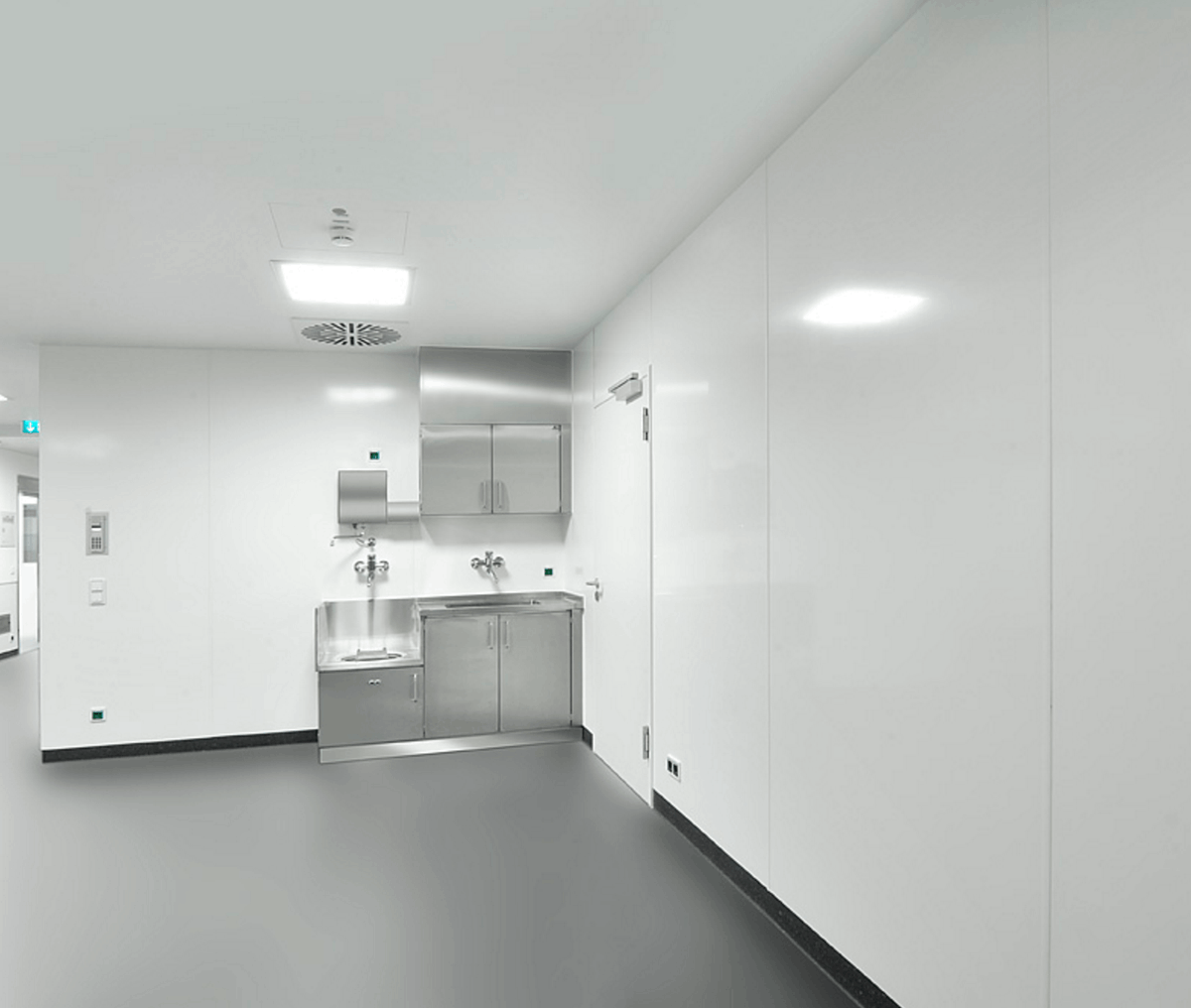
Stainless steel cladding is one of the most effective ways to create a hard-wearing, hygienic, professional wall finish in commercial and industrial spaces. It’s commonly specified in environments where surfaces must withstand constant cleaning, exposure to moisture, grease, heat, and day-to-day impact—think commercial kitchens, food prep areas, bakeries, butcheries, production lines, laboratories, healthcare settings, and back-of-house service zones. The reason it performs so well is simple: stainless steel is tough, non-porous, easy to sanitise, and built for long-term use.
A key benefit of stainless steel cladding is hygiene. In regulated environments, the wall surface isn’t just decorative—it’s part of the safety system. Stainless steel provides a smooth, non-absorbent face that doesn’t allow moisture or contaminants to soak in. Compared to painted walls that can scuff and peel, or tiles that rely on grout lines (which can stain, crack, and harbour bacteria), stainless steel delivers a surface that stays stable under repeated cleaning. This matters in kitchens and processing areas where frequent washdowns and heavy-duty cleaning chemicals are routine. A cladding system that remains intact and easy to wipe reduces both risk and maintenance.
Durability is the second big reason stainless steel cladding is so widely used. Busy operational spaces are hard on walls: trolleys knock into corners, equipment shifts, deliveries bump surfaces, and staff work at speed. Stainless steel resists dents better than many alternatives and is far less likely to degrade in damp environments. It also tolerates temperature changes well, which is essential around cooklines, dishwash zones, and service hatches. When installed correctly, stainless steel cladding acts as a protective skin for the underlying wall structure, preventing moisture damage, reducing repair cycles, and keeping areas looking professional for longer.
There’s also a compliance element. While exact requirements depend on the setting, many hygiene-critical environments need finishes that are easy to clean and maintain, with minimal areas where dirt can accumulate. Stainless steel naturally supports this, especially when you pair it with the right detailing: sealed edges, appropriate joints, and profiles that leave no exposed gaps. In many food environments, the goal is simple: a wall finish that can be cleaned quickly and consistently, day after day, without deteriorating.
Choosing the right finish is important. In commercial settings, a brushed or satin finish is often preferred. It keeps the look modern while helping to reduce the visibility of fingerprints, light marks, and small scratches that can come with daily use. Highly polished finishes can look impressive, but they tend to show smudges more easily and are less forgiving in high-traffic zones. StainlessSteelCladding.co.uk typically supports projects where practicality matters, so the finish choice is about balancing appearance with real operational demands.
A common question is whether stainless steel cladding should cover the full wall or be targeted to certain areas. The answer depends on use. In some kitchens, full-height stainless steel makes sense—particularly where walls face constant splashing, heat, or impact. In other spaces, a hybrid approach is more cost-effective: stainless steel in critical zones (behind cookers, along prep lines, near sinks and dishwashers) combined with hygienic PVC cladding across larger wall sections. This is a practical way to manage budget while still delivering a compliant, easy-clean environment. It also allows you to reserve stainless steel for zones where its performance advantage is most valuable.
Installation method matters more than many people realise. Stainless steel cladding can be installed using specialist adhesives, mechanical fixings, or a combination. Adhesive fixing is common for achieving a neat, flush finish—particularly on flat substrates—while mechanical fixings may be used where conditions demand additional security. The substrate preparation is crucial: a stainless steel sheet will only sit as well as the surface behind it. Poor preparation can cause unevenness, reduce adhesion, or create pockets that trap moisture. If you’re aiming for a high-end, hygienic finish, installation should be treated as part of the system—not an afterthought.
Edges and joints are where hygiene standards are won or lost. If a cladding system has open edges, untreated seams, or inconsistent sealing, it can create places for water, grease, and debris to gather. That’s why profiles, trims, and sealants are often used to close off vulnerable areas. Internal corners, external corners, end caps, and junctions with floors or worktops all need careful detailing. In truly hygiene-critical settings, certain joints may be welded and finished for a near-seamless result, but even without welding, a well-designed profile and sealing approach can deliver strong outcomes.
Stainless steel cladding also works beautifully with stainless steel splashbacks, internal wall panels, and protective kick plates. In a kitchen environment, splashbacks handle intense localized splashing and heat; wall cladding can extend protection across entire work zones. Together, they create a consistent surface that is easy to clean and visually cohesive. That consistency isn’t just about looks—it supports faster cleaning routines and easier inspection because surfaces behave the same way throughout the space.
If you’re specifying stainless steel cladding as part of a refurbishment, downtime is often a big concern. Many businesses need a solution that installs efficiently so operations can resume quickly. With the right planning, sheet cladding can be cut to size and installed in a streamlined way, particularly when measurements are accurate and service penetrations are mapped in advance. Reducing on-site cutting and rework helps speed up installation and improves the final finish.
From a cost perspective, stainless steel is often perceived as premium—and it can be. But it’s also one of those materials where value is best measured over time. Repainting, repairing damaged walls, replacing cracked tiles, or dealing with moisture-damaged substrates can add up quickly. Stainless steel cladding, installed properly, is designed to reduce those ongoing costs. It’s a “fit it once, maintain it easily” approach that many commercial operators prefer.
In short, stainless steel cladding is popular because it solves real problems. It’s hygienic, hard-wearing, easy to clean, and visually professional. Whether you need full wall coverage or a targeted approach combined with other hygienic materials, stainless steel remains one of the most reliable ways to create compliant, easy-clean interiors. For businesses that take hygiene and durability seriously, it’s a practical investment that supports day-to-day operations as well as long-term maintenance planning.